
The Challenge
Death Before Dishonor, Episode XX

Death Before Dishonor Is Back!
These final three episodes lead to the famous duel between two master swordsmen, Guido Rangoni and Hugo Pepoli.
After a lifetime of rivalry, stretching back to their boyhood in Bologna, Guido and Hugo found themselves serving together in the Venetian army.
We last left off after the disastrous Battle of La Motta where that Venetian arm was obliterated by a combined force of savage German Landsknechts and hard-bitten Spanish Rodeleros. In defeat, both men showed their true colors: Hugo Pepoli fled the battlefield to tell his superiors whom to blame while Guido Rangoni led a hard charging raid deep into the enemy rear.
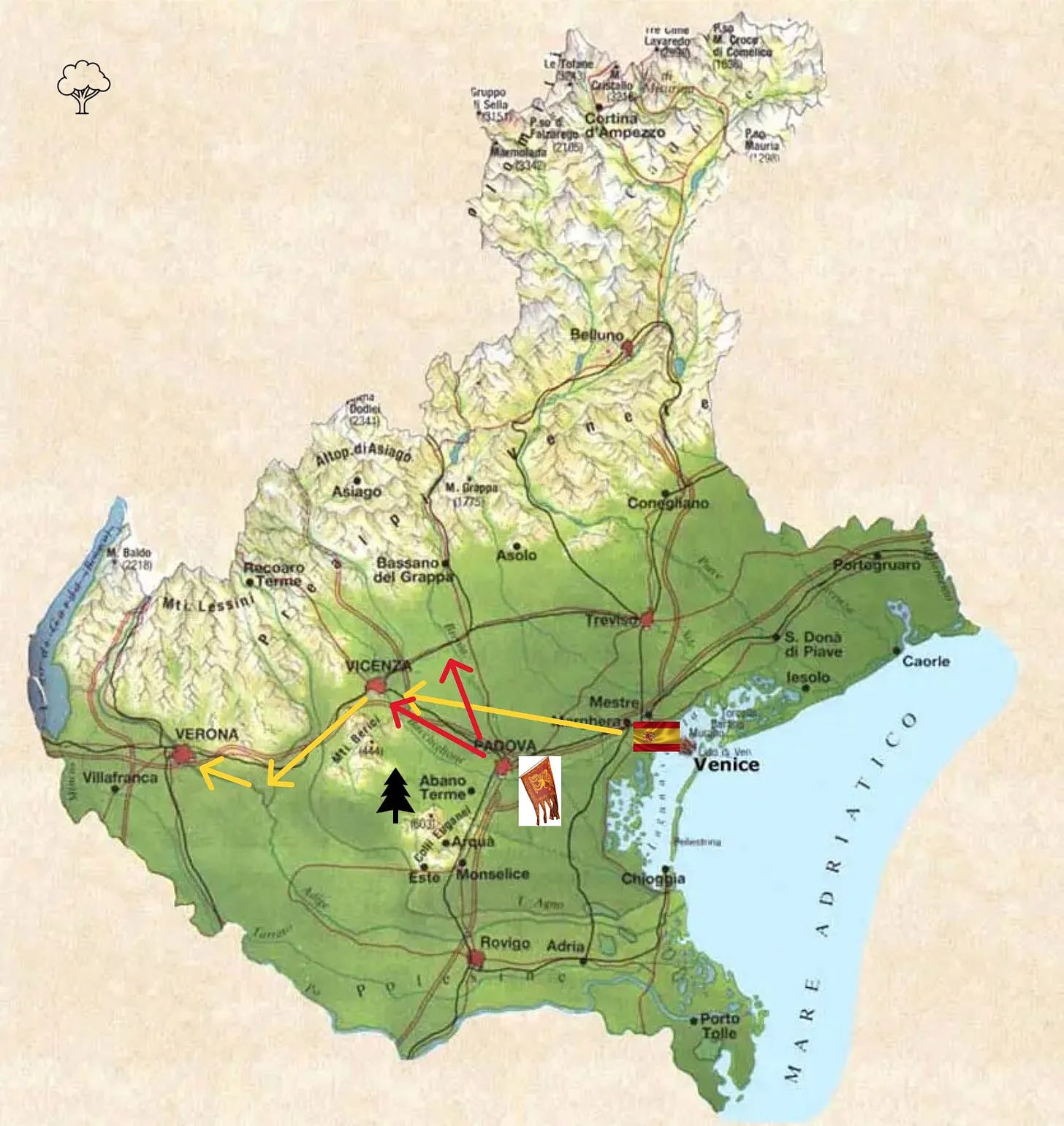
The Battle of La Motta in the fall of 1513 pitted the Republic of Venice pitted the Republic of Venice—and its condottieri Guido Rangoni and Hugo Pepoli—against an allied army of Germans, Spaniards and Italian mercenaries. Superior generalship by the Venetian commander d’Alviano had brough the Venetian forces within a hair’s breadth of triumph. Now the battlefield was black with crows feasting on Venetian dead. This happened because the Venetian parchment pusher in charge of the army forced d’Alviano to forsake a certain but bloodless victory for a risky and ultimately fruitless chance at a legendary win.
Now the parchment pusher was dead, along with the majority of the Venetian army. Hugo Pepoli led one group back to the city of Treviso. Guido Rangoni led a raid into the enemy’s rear, and then brought his cavalry into the city of Padua.
The future of the Republic of Venice now rested upon these twin fortresses. Though these were modern defenses, and the most well-defended cities in Italy, they still needed determined men to guard the ramparts. Of the 700 men-at-arms who had left Padua a week before, only 400 remained, and even among them, many had lost their horses, their armor—everything that made them effective fighters. [1]
Treviso was no better off. Of the 200 men-at-arms under Baglioni, only eighty had returned. Hugo Pepoli, scrambling to salvage order, had little more than a remnant of shattered troops to brace against the inevitable storm. [2]
Venice needed more soldiers. But where would they come from?
Since the war began, the Republic had bled men at a staggering rate. Thirty thousand infantry had already fallen in battle—perhaps twice as many were lost to disease. [3] The endless tide of men willing to trade their lives for a handful of gold had dried up. The city, once proud and defiant, now murmured with despair.
Yet, despite the public sorrow, the leaders did not let their grief turn them away from the necessities of war. They decreed that new cohorts of Urban Guards should be raised immediately and sent as reinforcements to Padua and Treviso. Without delay, the, “Noblest of Venetian youth, driven by a sense of duty to their country, competed among themselves to arm their followers and lead individual contingents to defend those cities.”[4]
The youth of Venice—noble-born, privileged, untouched by war—stepped forward. Not out of greed, nor coercion, but from something deeper. Duty. Pride. A refusal to watch their republic fall while they stood idle. They competed among themselves, arming their followers, assembling contingents, ready to march.
But Venice needed something more than raw youths with courage. They needed men-at-arms and experienced men-at-arms to lead them. They needed men like Hugo Pepoli. The Republic, desperate for every capable fighter, finally saw fit to reward him for his past service. No longer a subordinate, Hugo Pepoli was granted his own command: twenty-five men-at-arms in Venetian service.[7]The allied army could not get past the fortresses of Treviso and Padua, and short of food, was soon retreating off to the west.
A Winter of Discontent
Autumn turned to winter, but for Venice, it was a moment of breathless relief. More than that, it was an opportunity.
Venice’s generalissimo, Bartolomeo d’Alviano, had been waiting for this moment. He had seen the disaster coming. He had known the system was broken, knew that Venice could not produce infantry capable of open field battle. And now, at last, he had time to reshape the Venetian military—not into the ill-prepared mob that had crumbled at La Motta, but into a force forged in discipline and blood.
The old ways had failed. The future belonged to something new.
Unfortunately for Hugo Pepoli, he was not part of that future.
Alviano was disgusted with the poor quality of his captains, especially those of his men-at-arms. He only wanted to keep the very best companies—his own, of course. He also admired Guido’s unit and Guido himself, as a “promising if still young commander.” To free up money, he convinced Venice to get rid of many of their other captains and their companies including that of Hugo Pepoli.[8]
For Pepoli, it was a damning indictment. His escape from the slaughter at La Motta without so much as a wound may have sealed his fate—Venice had no use for a man who fled untouched while others bled. Stripped of his command, he gathered what remained of his men and rode back to Bologna, his career in Venetian service dead before it had truly begun.
But Alviano’s crusade did not end with the cavalry. The real problem, the deeper rot, lay within the infantry.
This was the weapon of the future. Yet the Italian way of war—exalting individual skill—left their foot soldiers ill-prepared for the brutal reality of the battlefield. In duels and in skirmishes, Italians often humiliated their foreign rivals.[9] But in the clash of armies, where discipline ruled and the strength of the formation mattered more than any single man’s prowess, they faltered.
Alviano imposed new rules on the officers, specifically forbidding them from riding swift horses, which they used to leave their men to their fate. He also forbade gambling and threatened to cut the faces of the whores that thronged the camps. He also imposed a new system of organization, standardizing the infantry companies. But the greatest problem in the massed infantry combats was the panic that swept through the untrained and unprepared ranks. An infantry company might contain 1000 men, with no one for the panicked young solider to look to. Alviano created a new system of sub-officers picked men who could keep their nerve. This gave the inexperienced men in packed infantry formations someone to look to, and also created a path for a career for infantrymen looking to serve for more than just loot.
He formed each company of 256 men, composed of 16 squads of 16 men each. He provided two corporals and a sergeant for each file of 16 men.[11]
These officers, paid more than their subordinates, were a break from Venice’s long-standing tradition of military frugality. But Alviano did not care for Venice’s purse strings. He cared only for victory. He needed his lowest-ranking infantrymen to have solid battle tested leaders to look to when fear started to overtake them.
He provided four other subofficers, each commanding a platoon of some sixty-four men.
To lead this infantry, Alviano proposed a new Captain of infantry who would have the power to approve any men or any promotion in the ranks of infantry. Alviano proposed Guido’s uncle, Hannibal Bentivoglio, recently the lord of Bologna. Hannibal Bentivoglio offered more than his sword—he said would raise 4,000 men for Venice. [12] Alviano, who had once fought him outside Pisa. But Venice hesitated. Bentivoglio’s ambitions lay elsewhere. He burned to return to Bologna, to reclaim what had been stolen from his family. To give him power meant inviting diplomatic trouble. Before granting him authority, Venice sought the Pope’s blessing. It was a necessary formality, yet a telling one. Venice’s relations with Rome were in a strange limbo—technically, they were at war, but it was a war with more posturing and less blood.[13]
Rome told Venice to find someone else, or at least, so it appears.[14]
And then there was Guido Rangoni. Alviano had plans for him, plans that would see him among the most trusted cavalry commanders. But Guido had other designs. But Guido was now moving out of Venice’s orbit towards a new master, in Rome.
His Holiness’ Army
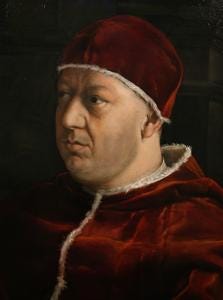
Pope Leo, heir to Julius II’s turbulent reign, was a member of the powerful Medici family. During their dark days, Guido’s family had given them sanctuary and now the Pope looked to return the favor.[15] Guido’s own brother had served Leo long before he ascended to the papacy, and now, as one of the Pope’s earliest appointments, he was set to be made a cardinal. Would the Pope appoint Guido Rangoni to a similar position? The war between Venice and Rome was cooling, and with shifting alliances came new opportunities. Pope Leo summoned Guido to Rome.
Venice granted Guido leave to travel south, but with a condition: he would not take his men with him. And so, he set out for Rome, accompanied by his friend John Paul Baglioni—Hugo’s former boss.[16]
Once in the Eternal City, Guido found himself under close scrutiny. His conversations with the Pope and his advisors were not idle diplomacy. Rome had questions, pointed and urgent. The Bentivoglio still schemed to reclaim Bologna, and Guido, bound by blood to Hannibal Bentivoglio, was a man whose true loyalties could not be taken for granted. Would he serve the Pope, or would he use his position to help the Bentivoglio?
Guido told Venice it was not going well and that he would be released from Rome soon. [17] But then, seemingly at the last minute, the Pope’s court became convinced of Guido’s loyalty.
Meanwhile, Venice tried in vain to reach Guido Rangoni. Their ambassador’s repeated attempts at contact were met with nothing but silence.[18] And when news finally came, it was a revelation. The Pope was considering making Guido Rangoni, Captain General of the Papal Army—that is the overall commander of the Papal Army. or, at the very least, Lieutenant General.
Not a bad change in circumstances, when, a year before, Guido’s political enemies had tried to get him fired and only the loyalty of his men stayed their hand.
Venice, which had so easily sent him away, now found itself watching as others competed to claim him. Even the Emperor was vying for Guido’s service. [19 ]There was satisfaction in that for Guido, no doubt.
Ultimately, Guido took service with the Pope, not as the Captain General, but as second in command. But just as Guido seemed poised for greatness, an old threat was about to resurface.
He was about to run into a Hugo-sized problem.
The Insult
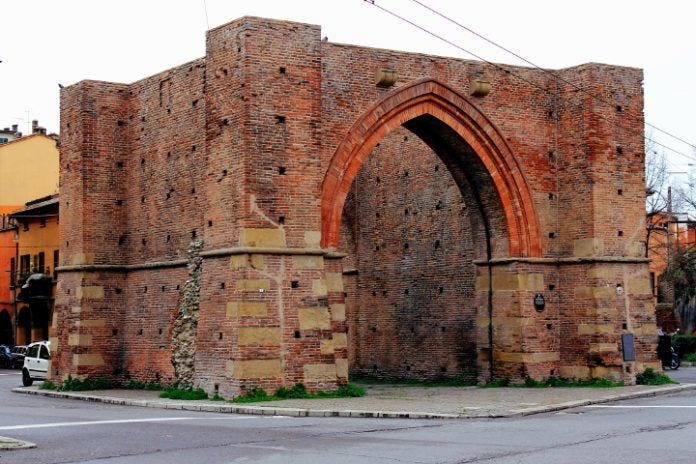
In the dead of winter, January 1514, Guido Rangoni returned to Bologna. He was no longer an exile, no longer an excommunicate and no longer had a price on his head. He came in through the city gates at the head of a small army. His mission: to raise infantry for a coming war.
This was a fight against the Duke of Urbino, the nephew of the late Pope Julius II. But for Guido, this was not just another campaign. This was personal. It was time for some payback. The Duke of Urbino had committed an atrocity years earlier—he had seized Bentivoglio men-at-arms in 1509 and, despite a peace agreement, had them beheaded. These men had been friends of Guido’s. Now, Guido had the chance to balance the scales.
Guido’s name carried weight in Bologna, a city split between factions. The Church’s loyalists saw him as a trusted lieutenant of the Pope. The Bentivoglio partisans, who still longed for their old rulers, viewed him as one of their own. With his famous names, Guido could have little trouble filling out his ranks.
Hugo Pepoli, too, had returned to Bologna. But unlike Guido, he had come in disgrace. Once, he had reveled in boasting of his triumphs over Rangoni. Now, those words rang hollow. The man he had once mocked stood at the height of his power, while Hugo had lost nearly all his prestige.
After fleeing the Battle of La Motta, Hugo found himself adrift. Venice had no use for him. Commands were scarce for a man with his reputation. He had fallen to the rank of a lone man-at-arms—a broken lance as Italians called men like him.
Desperate to climb back up the ranks, Hugo made his move. He approached “Little” Guido Rangoni, seeking a captaincy in the new force of Bolognese infantry. There is no surviving record of their exchange, but it must have gone something like this:
Hugo: As I mentioned before, I’ve got some things lined up. I’m negotiating with the Pope’s men for a contract. But then I thought to myself, my old friend Guido is putting together a company of Bolognese, and I should come help him put these boys into shape. As you know, when we met on the battlefield the first time, when I’ve got infantry behind me, I can’t be stopped.
Guido: Thanks for the offer, Hugo. When I need someone to lead the retreat, I’ll send for you.
The insult landed like a blade to the gut. Rangoni had called him a coward—to his face, in public, with no hesitation.
Hugo’s humiliation turned to rage. Soon the city was buzzing with rumors of the exchange, and he knew they would only grow louder. He knew exactly what had to be done. Hugo Pepoli would challenge Guido Rangoni.
But there was a problem. Dueling had its rules, and a man like Guido—a nobleman, a decorated commander—was not obligated to answer the challenge of a down-on-his-luck warrior like Hugo Pepoli. Rangoni could ignore him entirely, and lose no honor in doing so. [21]
Hugo needed a plan.
He did not issue the challenge immediately. Instead, he began to spread whispers, speaking ill of Guido at every opportunity. He played the long game, needling at his enemy’s pride, pushing the hotheaded Rangoni toward a breaking point. The more Hugo spoke, the more tongues wagged.
Soon, the Pope himself heard of it. He summoned both men to Rome, hoping to put an end to their dispute. But words alone would not settle this.[22]
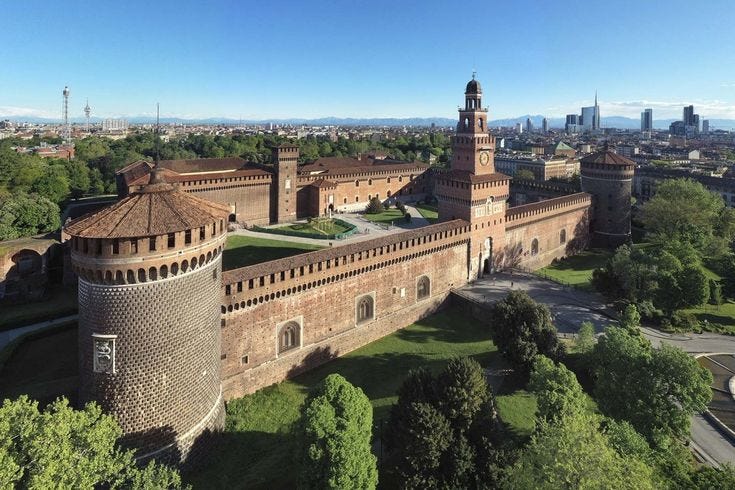
Hugo had already secured a dueling ground. The Duke of Milan had agreed to host the fight—though how Hugo managed to arrange this remains a mystery.
And at last, when the moment was right, he sent the challenge.
The Challenge
We do not have Hugo Pepoli’s challenge. But we do have Guido Rangoni’s response, one that he had widely published in Italy.[27]
“To Count Hugo of Pepoli: I, Guido Rangone, have received your letter of challenge. Dated the eighteenth of February together with letters patent from the Illustrious Lord, the Duke of Milan, by which he ensures us a dueling field within his dominion. It appears to me that your purpose is to acquire some name or reputation more by words than deeds. I have reached my great status through my deeds, by the grace of God. Because I am a man of deeds I am sending you my friend to make you understand that I have accepted the field as of March 21st and will fight there in the near future.”
“On that date, God willing, I will present myself where He will be the deputy for the protection and defense of my honor.”
“To keep this brief, understand that I am not able to accept any more letters or words from you. Let now our arms do the speaking. Though I could just as easily trade insults with you.”
“You will provide yourself with an armored Courser, and you will armor yourself as a man-at-arms, complete with all the pieces. You will provide yourself with a horse on the lighter side and so too with a light saddle; and your horse will be saddled only with an iron bridle and kept fast with chains. As to its armor it will be on the lighter side, with a half skull for its head, what is called a “Turca” by the Spanish. And it will have mittens that are as strong or soft as you prefer.”
“And understand that I will add and remove any of the above horses or arms as I see fit. As to weapons offensive and defensive, I will bring that which I like most and present it to you in the field and always keeping it within my power to change the arms and manner of fighting as I see fit.”[28]
Sent from Rome on the 29th of March.
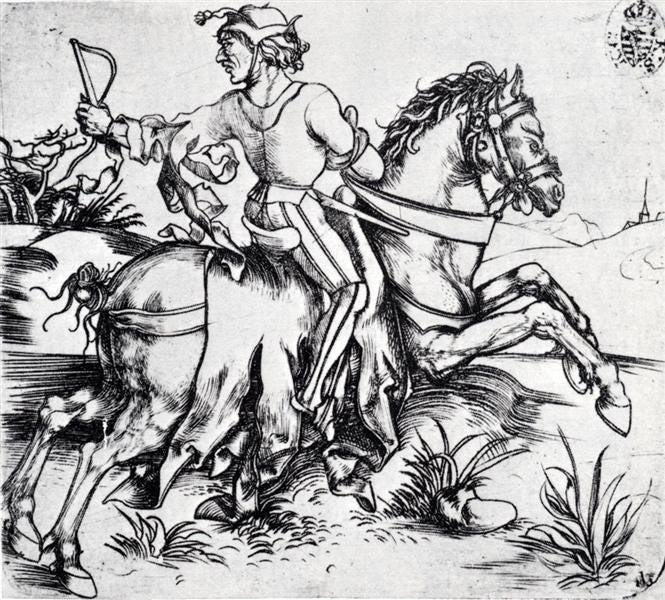
This was great news for Hugo. He would have a chance to regain his reputation. He would have particularly relished the chance to go lance to lance with Guido. Of course Hugo had to know that this all might have been a ruse and Guido never had any intention of fighting on horseback with him. It was a routine practice of the Renaissance duellist to list all manner of weapons for a fight and then choose to duel with something else.
Still Hugo Pepoli soon left for Milan hoping for the chance to bolster his reputation and restore his career as one of the top condottieri in Italy. Guido Rangoni did likewise. He would assuage the many Hugo had made to him over the years in Hugo’s blood.
Stop the Duel!
In April of 1514 the Venetian ambassador to Rome sent a message home saying that Guido and Hugo had both gone to Milan, “both determined to fight.” The Pope immediately sent along a brief to the Duke of Milan asking him not to allow the duel.[29] The Pope was not about to risk these two soldiers over a childish quarrel of honor.
But the question remained – would the messenger reach Milan before the fighters? Would the Duke even heed it?

[1] Sanuto, col. 224.
[2] Sanuto, col. 224.
[3] See www.condottierediventura.it, “Battaglie” for 1500-1509 and 1510-1519.
[4] Giovio, p.567.
[5] Sanuto, col. 259.
[6] The situation is a little more complex. Baglioni ends up paroled and has to find money to pay off his captors. Regardless he is unable to serve as a Venetian commander. See www.condottieridiventura.it entry for “Giampaolo Baglioni.”
[7] Sanuto, col. 205
[8] Sanuto, col. 268
[9] The most famous of these is probably the Battle of Barletta where seven Italian men-at-arms handily defeated an equal number of French knights.
[10] This is suppositional. We do know that the fastest horses were those called “Turkish” or “Arabian” while Germany was the primary source for horses in Italy.
[11] Sanuto, col. 429-430.
[12] Sanuto, col. 429-430.
[13] There are frequent mentions in the diaries of this period indicating that Rome was pulling for Venice to beat its allies from beyond the Alps.
[14] Sanuto, col. 197. It’s not specified that the Pope turned this down. However, Hannibal was not hired as Captain of Infantry. It’s possible that the current Captain of Infantry at that time (Renzo da Ceri) simply refused the promotion to Governor General so as not to have to serve directly with Alviano. But since this left the post of Governor General unfilled it’s safe to say that resistance from the Pope was probably a large factor in the decision.
[15] Sanuto, col. 355
[16] Sanuto, col. 370. As frieeds s see www.condottierediventura.it entry for “Guido Rangoni” for September 1513 where Baglioni brought Guido’s sword fight with the collateral general to a quick end.
[17] Sanuto, col. 472.
[18] See www.condottierediventura.it, entry for “Guido Rangoni” January 1514. Sanuto, col. 512.
[19] Sanuto, col. 487.
[20] Other than a short trip in December of 1510.
[21] See Marozzo chapters 186 & 187.
[22] Sanuto, col. 187. It is possible that they were both in Rome for other reasons, but considering the big to do that Guido Rangoni made about answering Hugo Pepoli’s challenge, it is sure that the Pope heard of it and wished to intervene.
[23] Other than a short trip in December of 1510.
[24] It is possible that Hugo was maintaining a squadron as part of another company, but there is nothing to support that idea and his next opportunity to command is with a smallish company of light cavalry for a short time, an assignment he likely would not take if he had steady employment as a “caposquadre” or lieutenant in a company of men-at-arms.
[25] See Marozzo chapters 186 & 187.
[26] Sanuto, col. 187. It is possible that they were both in Rome for other reasons, but considering the big to do that Guido Rangoni made about answering Hugo Pepoli’s challenge it is sure that the Pope heard of it and wished to intervene.
[27] Sanuto, col. 119.
[28] Sadly at this time I have forgotten where I found Rangoni’s challenge.
[29] Sanuto, col. 187.